Bon Secour takes its name from a French phrase meaning "good help" or "safe harbor," a reminder of the French settlers who founded a fishing village on the Bon Secour River in the 1700s, soon after the French colony at Mobile was established.
More about Bon Secour
During the Civil War the river's marshes became an industrial site. The Union blockade cut off the South's salt supply, causing a salt famine by 1862, and a large salt works grew up near the mouth of the Bon Secour River. According to a historical marker at the site, it covered a square mile on both sides of the river, with 55 furnaces holding 990 kettles that boiled down brine from log-lined wells dug in the marsh. Three hundred enslaved people provided the labor, and the works could produce nearly 2,000 bushels of salt a day for curing meat for the Confederate Army. Camp Anderson stood nearby.
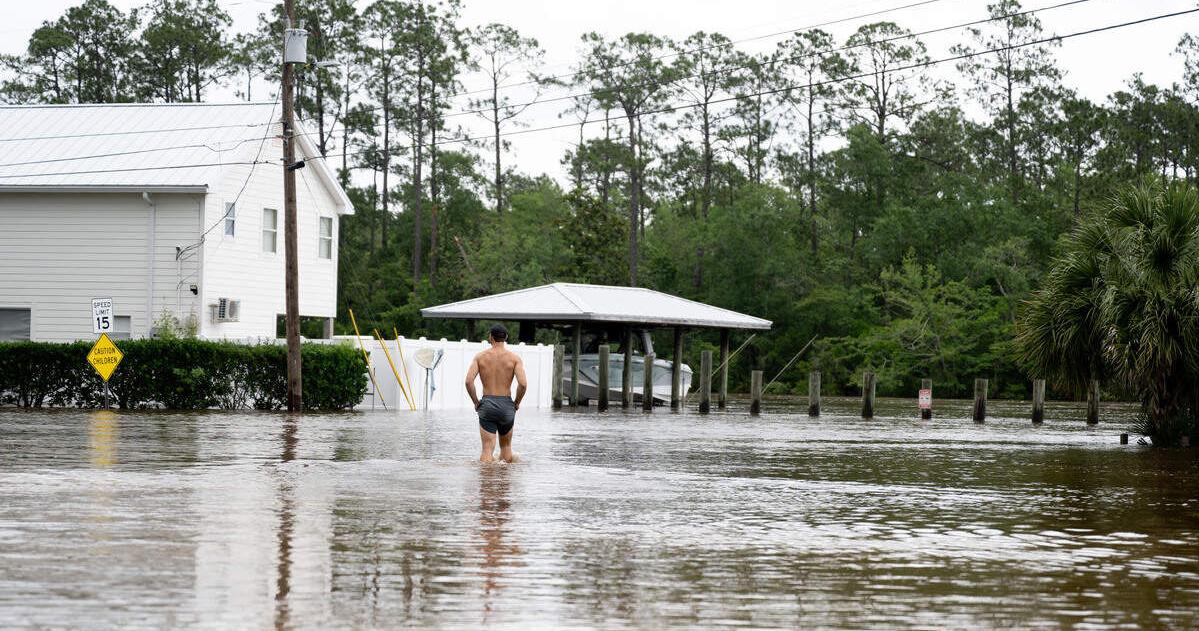
After the war, lumber and fishing sustained the village. In 1882 Thomas Gavins, a descendant of French settlers, built a four-room dogtrot cabin on the river; around 1898 Charles Swift, who had come to Alabama in 1880, bought it with the surrounding land and built a sawmill. The Swifts ran the post office in the early 1900s, built the area's first one-room school and, as their family grew to eleven children, enlarged the cabin into a 6,000-square-foot home. The Swift-Coles Historic Home opened to the public in 2009. Bon Secour has weathered hurricanes Frederic in 1979, Ivan in 2004 and Katrina in 2005, and the Bon Secour National Wildlife Refuge, established by Congress in 1980, protects more than 6,700 acres nearby.
Sources
The Historical Marker Database: Vicinity of Salt Works and Camp Anderson
The Historical Marker Database: The Charles Swift Family / Swift Coles Historic Home
Wikipedia: Bon Secour, Alabama (citing the U.S. Fish and Wildlife Service)