The Kizh, or Tongva, lived in the Irvine area for thousands of years before Europeans arrived. Gaspar de Portola's expedition passed through in 1769. After Mexico secularized the missions in 1833, the land that became the Irvine Ranch was made up of three ranchos: Santiago de Santa Ana, San Joaquin and Lomas de Santiago.
More about Irvine
In 1864 Jose Andres Sepulveda, owner of Rancho San Joaquin, sold 50,000 acres for $18,000 to Benjamin and Thomas Flint, Llewellyn Bixby and James Irvine to pay debts from the Great Drought. In 1866 the partners bought the 47,000-acre Rancho Lomas de Santiago for $7,000, and in 1868 a lawsuit divided Rancho Santiago de Santa Ana among them. They grazed sheep at first. In 1878 Irvine bought out his partners for $150,000, and his 110,000 acres ran 23 miles from the Pacific to the Santa Ana River. After his death in 1886 his son James Irvine II formed the Irvine Company and turned to field crops, olives and citrus. The Santa Fe Railroad's station of 1888 was named for Irvine, but the town around it was called Myford, after his son, because another post office already had the name. It became Irvine in 1914. By 1918 the ranch grew 60,000 acres of lima beans.
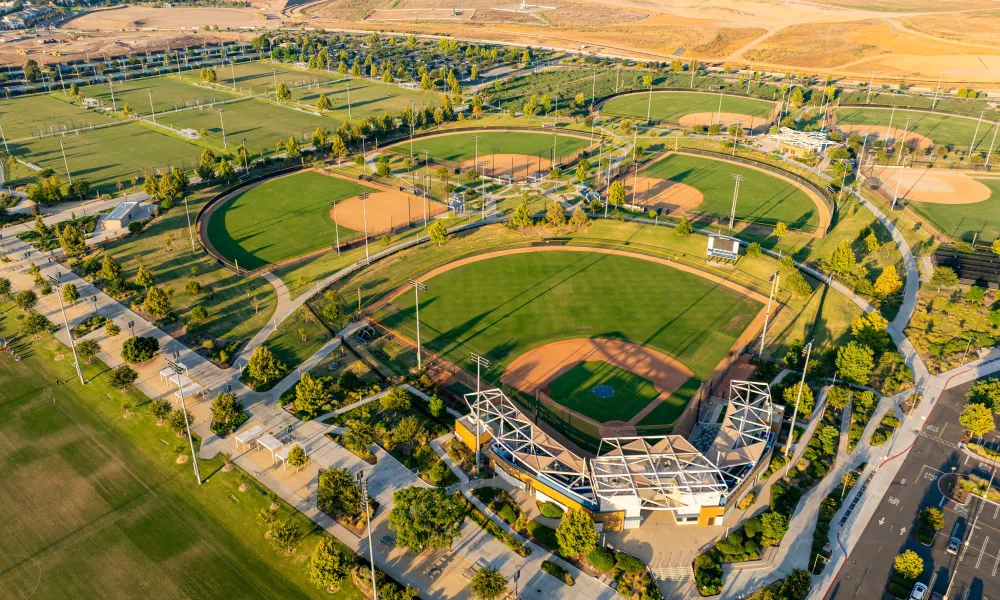
Marine Corps air stations at El Toro and Tustin were built on ranch land in World War II, and the 1953 National Scout Jamboree, held on the ranch, gave Jamboree Road its name. In 1959 the University of California asked for 1,000 acres for a new campus. The architect William Pereira and the company's planners drew a master plan for a city of 50,000 around it, with industry, housing, shopping and greenbelts, and the old railroad town was renamed East Irvine.
Sources
Wikipedia: Irvine, California