Freeport was once part of North Yarmouth, called Harraseeket after the Harraseeket River. First settled about 1700, it was set off and incorporated as Freeport on February 14, 1789, probably named for the openness of its harbor, free from ice. It developed as four villages, Mast Landing, Porter's Landing, South Freeport and Freeport Corner, all now part of the Harraseeket Historic District on the National Register of Historic Places.
More about Freeport
At Mast Landing, at the head of tide on the Harraseeket, timber was shipped, especially for masts, and the estuary was dammed to power a gristmill, sawmill and fulling mill. Porter's Landing was a shipbuilding center after the Revolution, an industry that peaked between 1850 and 1860 and declined with the Civil War, and South Freeport, the largest waterfront village, once had four shipyards along with fishing, canning and farming. In 1903 Amos Gerald built the Casco Castle hotel there to encourage trolley travel; it burned in 1914, but its tower still stands.
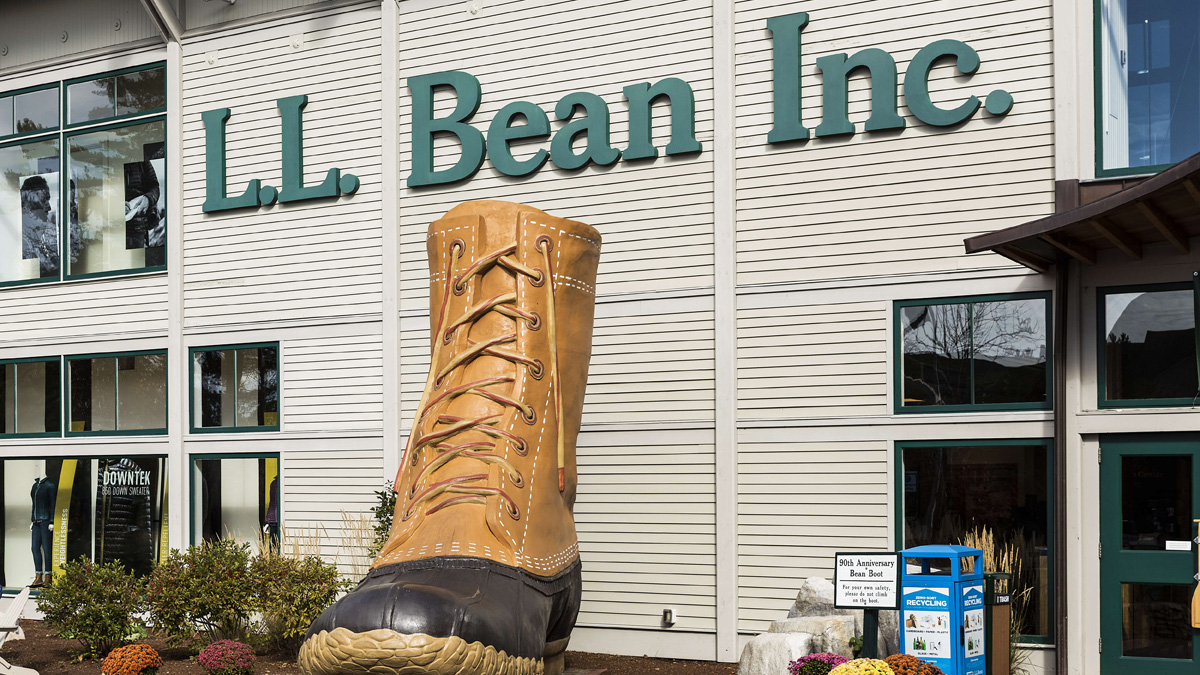
Freeport Corner, an inland farming and trading village, became the town's commercial center after the railroad arrived in 1849. In the 19th century fabric was sent from New York and Boston to be sewn into clothing by local pieceworkers, and the businessman E. B. Mallet established a sawmill, brickyard, granite quarry and large shoe factory. In 1912 Leon Leonwood Bean opened a store in the basement of his brother's apparel shop there, selling the Bean Boot, or Maine Hunting Shoe. L.L.Bean began staying open 24 hours a day in 1951 and grew into a worldwide company that anchors the town's outlet shopping.
Sources
Wikipedia: Freeport, Maine