
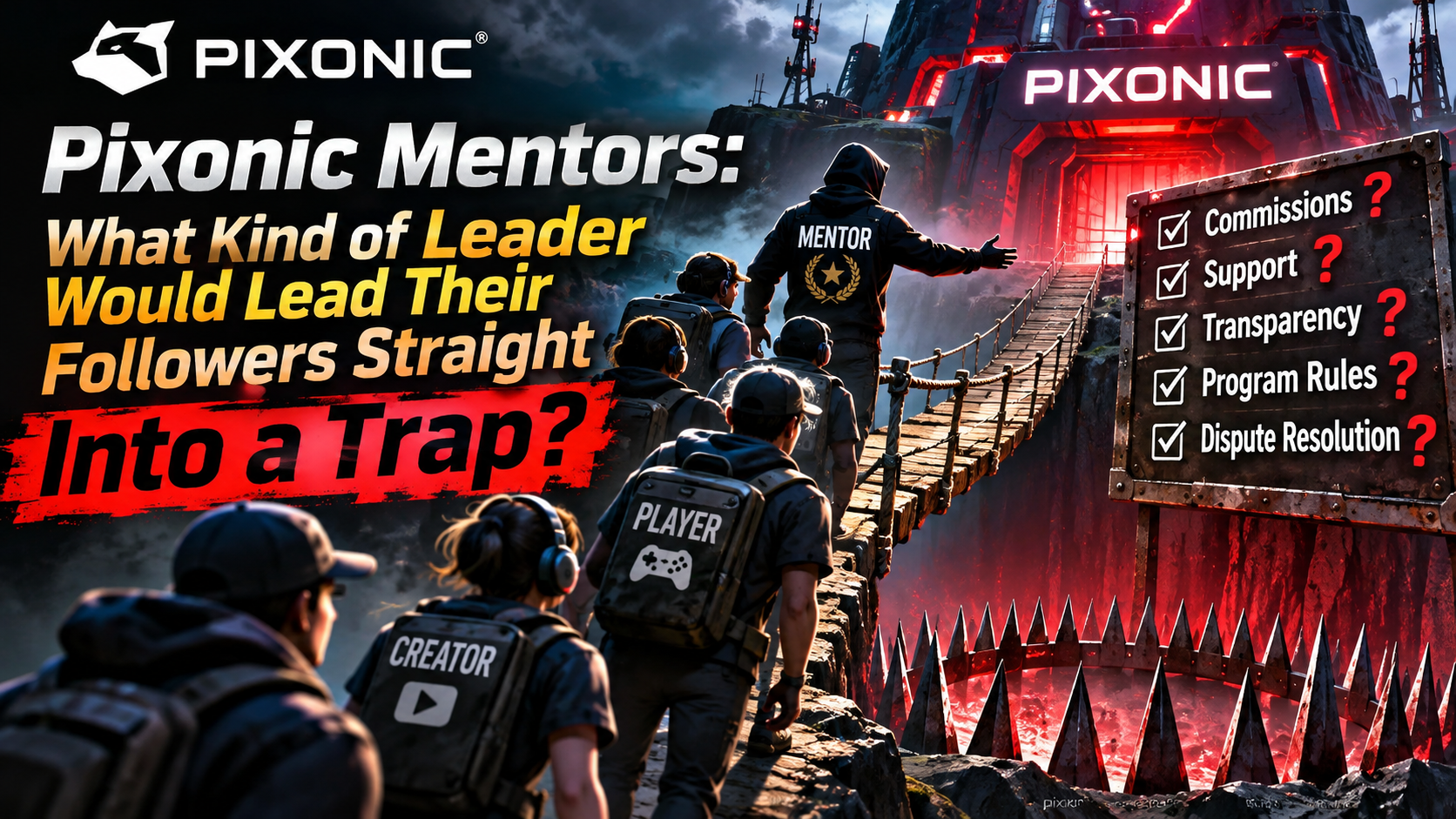
What Kind of Mentor Leads People Into a Trap?
A Mentor is supposed to know better.
That is the entire purpose of mentorship. Someone with experience, knowledge, and influence is expected to help others recognize opportunities, avoid mistakes, and make informed decisions.
So here is a question every Pixonic Mentor should be willing to answer:
What kind of Mentor, in their right mind, would knowingly lead their followers into a trap?
When a company faces complaints about financial transparency, unanswered support requests, questionable creator compensation, and inconsistent program rules, responsible leadership demands something more than continued promotion.
It demands questions.
It demands answers.
And, most importantly, it demands that the people being encouraged to participate understand what they are getting into.
Pixonic Has Questions to Answer Before Mentors Should Be Recruiting Anyone
Pixonic's creator ecosystem has become the subject of serious criticism, including complaints involving commission reporting, creator support, financial information, and the way program requirements are communicated.
SpiderTaz has publicly raised concerns about these issues and says repeated attempts to obtain answers have gone unresolved.
Those complaints do not, by themselves, establish that Pixonic has deliberately created a trap or committed financial misconduct.
But they raise an important question for anyone promoting participation in the company's programs.
How can a Mentor responsibly recommend a system when significant questions about that system remain unanswered?
A Mentor should be able to explain how participants are compensated, what rules govern their participation, how disputes are handled, and where someone can obtain meaningful support when something goes wrong.
If those answers cannot be provided, why encourage people to enter?
Leading the Flock to Slaughter
There is an old expression about leading the flock to slaughter.
The flock follows because it trusts the leader.
It assumes the person walking ahead knows the destination, understands the dangers, and has its best interests in mind.
But what happens when the leader never checks what lies ahead?
What happens when warning signs are ignored?
What happens when people are encouraged to keep moving forward even though others are reporting problems?
That is not responsible mentorship. That is leading people blindly into unnecessary risk.
The comparison is about trust and preventable harm, not physical violence.
In a creator program, the potential consequences may involve wasted time, financial disputes, lost opportunities, or damaged confidence in the platform.
A Mentor who genuinely values followers should want those risks examined before encouraging anyone to participate.
A Mentor's First Responsibility Is to the People Who Trust Them
Being recognized by Pixonic should not mean abandoning independent judgment.
A Mentor may appreciate the company, enjoy War Robots, and believe its programs offer valuable opportunities.
None of those things eliminates the responsibility to ask difficult questions.
If creators report missing commissions, a responsible Mentor should want those reports investigated.
If support requests allegedly go unanswered, a responsible Mentor should want a functioning resolution process.
If financial information is allegedly displayed inappropriately, a responsible Mentor should want clear privacy protections.
And if program rules appear inconsistent, a responsible Mentor should demand clarification before recommending participation.
The responsibility of a Mentor is not to protect a company's reputation at the expense of the people being mentored.
It is to help those people make informed decisions.
Promotion Without Disclosure Is Not Guidance
There is a major difference between recommending an opportunity and promoting something without explaining its risks.
A genuine recommendation should include both benefits and limitations.
It should explain what participants can reasonably expect.
It should identify the conditions they must satisfy.
And it should acknowledge unresolved issues that could materially affect their decision.
Imagine a Mentor encouraging an aspiring creator to join Pixonic's program.
The creator invests months building an audience, producing videos, promoting the game, and meeting program requirements.
Then a disagreement develops over compensation or eligibility.
Where does that creator turn?
What happens if support does not respond?
Who explains the reporting system?
Who helps resolve the dispute?
Those are questions that should be answered before someone invests significant time or resources.
A Mentor should never confuse recruiting people into a program with preparing them to succeed in it.
Pixonic Mentors Should Be Asking the Hard Questions
Mentors have an opportunity to do something genuinely valuable for the War Robots community.
They can ask Pixonic to clarify its commission reporting.
They can request transparent procedures for reviewing disputed earnings.
They can advocate for reliable creator support.
They can ask how financial information is protected.
They can encourage the company to publish clear, consistent participation requirements.
And they can make sure prospective participants understand the rules before joining.
None of those actions requires hostility toward Pixonic.
They require accountability.
In fact, resolving legitimate concerns would strengthen confidence in the company and its creator ecosystem.
The alternative is continuing to promote participation while important questions remain unresolved.
That is a choice every Mentor should examine carefully.
What Happens When the People You Recruited Start Asking Questions?
Suppose a Mentor encourages dozens of creators to participate in a program.
Those creators trust the recommendation.
They invest their time.
They promote the company.
They build content around its products.
Then some begin reporting problems.
Will the Mentor stand beside those creators and help them seek answers?
Or will the Mentor distance themselves because challenging the company could threaten their own standing?
That is where leadership is tested.
Not when everything is going well.
Not when benefits are being distributed.
Not when the company is receiving favorable publicity.
Leadership is tested when the people who trusted your recommendation need you to stand up for them.
A Mentor who disappears when problems arise has failed the very people they encouraged to participate.
Pixonic Cannot Expect Trust Without Transparency
The company also has responsibilities.
If Pixonic wants creators and players to trust its programs, it should provide reliable support, understandable rules, transparent compensation reporting, and meaningful dispute-resolution procedures.
When complaints are raised, the company should examine them rather than leave participants wondering whether anyone is listening.
The concerns raised by SpiderTaz require responses supported by records and a fair review process. They should not be treated as proven findings without that examination.
But unresolved complaints should not simply be ignored because addressing them might be inconvenient.
Trust is not something a company can demand through its Mentors. Trust must be earned through its own conduct.
And no amount of promotion can substitute for accountability.
A Message to Every Pixonic Mentor
Before encouraging another player or creator to join a Pixonic program, ask yourself:
Do I fully understand what I am recommending?
Can I explain the financial arrangements?
Can I identify a reliable support process?
Can I explain how someone challenges an incorrect commission report?
Can I assure prospective participants that the rules are clear?
And if something goes wrong, am I prepared to help the people who trusted me?
If the answers are uncertain, perhaps the responsible decision is to seek clarification before recruiting anyone else.
That is not disloyalty.
That is mentorship.
Final Word: Don't Lead People Somewhere You Haven't Examined Yourself
The question facing Pixonic Mentors is not whether War Robots is an enjoyable game.
It is not whether Pixonic has created opportunities for some participants.
And it is not whether individual Mentors personally like the company.
The question is whether those Mentors are exercising responsible judgment when encouraging others to participate in programs facing unresolved complaints.
What kind of leader would knowingly guide people into a system they believe could harm them?
A responsible Mentor would investigate the warnings.
A responsible Mentor would demand answers.
A responsible Mentor would explain the risks.
And a responsible Mentor would put the interests of those being guided ahead of the convenience of the company being promoted.
Pixonic has an opportunity to address these concerns transparently.
Its Mentors have an opportunity to demonstrate that their titles represent genuine responsibility.
But until the questions are answered, the community should be asking one very simple thing:
Are Pixonic's Mentors leading people toward opportunity, or are they leading the flock straight into a trap they should have recognized?
Because a Mentor who knows the dangers and says nothing is not protecting the people who follow them.
And a leader who walks people into a trap is not much of a leader at all.
A leader who teaches you real life processes, in a real world way, is a REAL mentor.