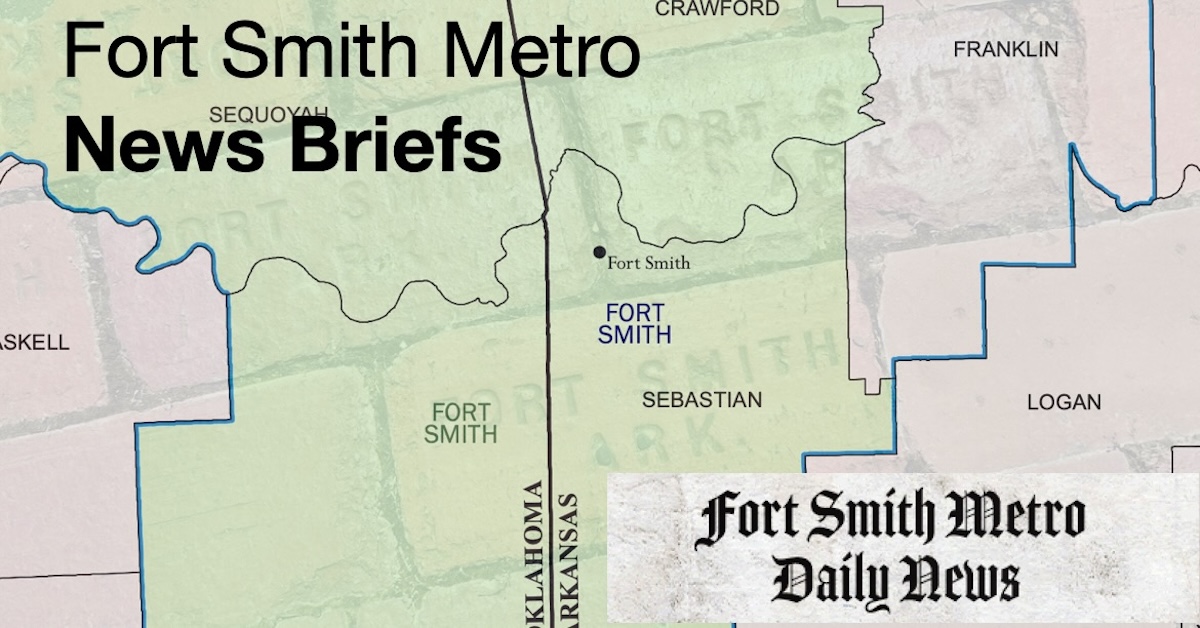
No evidence shows a permanent Native settlement at Fort Smith at the time of European contact, though the Cavanaugh Mound in the south of the city may once have been a lookout toward the Spiro Mounds in present Oklahoma. Hernando de Soto's 1541 expedition may have reached the area, and names such as Poteau, Belle Point and Massard Prairie point to later French trappers. The United States acquired the land in the Louisiana Purchase, and the Pike Expedition of 1806 surveyed the Arkansas River.
More about Fort Smith
In November 1817 Army troops built the first Fort Smith at Belle Point, a bluff where the Poteau River meets the Arkansas. It was named for General Thomas Adams Smith, who never visited, and was meant to keep peace between the Osage and Cherokee. Major William Bradford commanded until the Army moved west to Fort Gibson in 1824, and the sutler and land speculator John Rogers bought government land and promoted the town. In the 1830s the Army returned and enlarged the post, and from it troops carried out the forced removal of the Choctaw, Cherokee and other Southeastern nations to Indian Territory on the Trail of Tears. Fort Smith was a supply center in the Mexican-American War, and one of the earliest wagon trains to California left from there in 1849.
In 1875, with support from President Grant, Judge Isaac C. Parker was appointed to the federal court for the Western District of Arkansas, which also covered Indian Territory. Known as the Hanging Judge, he served until 1896 and sentenced 160 people to death, 79 of whom were executed. His courthouse is now part of the Fort Smith National Historic Site.
Sources
Wikipedia: Fort Smith, Arkansas