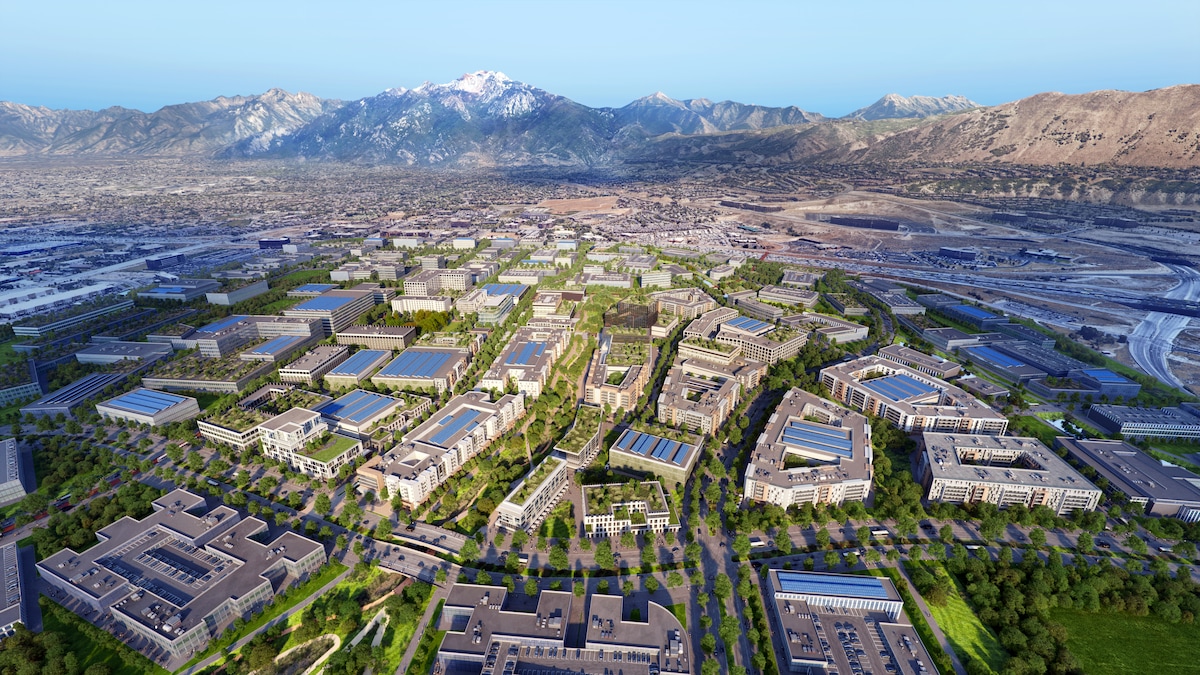
Sandy lies at the foot of the Wasatch Mountains, 13 miles south of Salt Lake City. Nomadic bands of Paiute, Shoshone and Bannock once traveled along the base of the mountains between their winter home at Utah Lake and their summer fishing grounds at Bear Lake. Permanent settlers arrived in the 1860s and 1870s, drawn by open land in the less crowded southern end of the Salt Lake Valley. In 1863 there were only four homes between Union and the Point of the Mountain. Within a few years Thomas Allsop, a Yorkshire farmer who had come to Utah in 1853, owned almost half of present Sandy, and LeGrand Young owned much of the rest. The original plat covered about one square mile on a terrace along the eastern edge of the Jordan River drainage.
More about Sandy
The origin of the name is uncertain. The most common belief is that Brigham Young named it for its thirsty, sandy soil, though no historical evidence supports this. Another theory credits Alexander "Sandy" Kinghorn, a Scottish engineer who ran the first train to this end of the valley, and the early name Sandy Station seems to support it, but historians consider it unlikely given how soon the name appeared after train service began.
Mining shaped Sandy's first four decades. When silver mining began in Little Cottonwood Canyon, Sandy became a supply station, its main street lined with hotels and saloons serving miners. Three major smelters, the Flagstaff, the Mingo and the Saturn, made it for some years the territory's most important smelting center, and the railroad built in 1873 connected it with Salt Lake City.
Sources
Wikipedia: Sandy, Utah