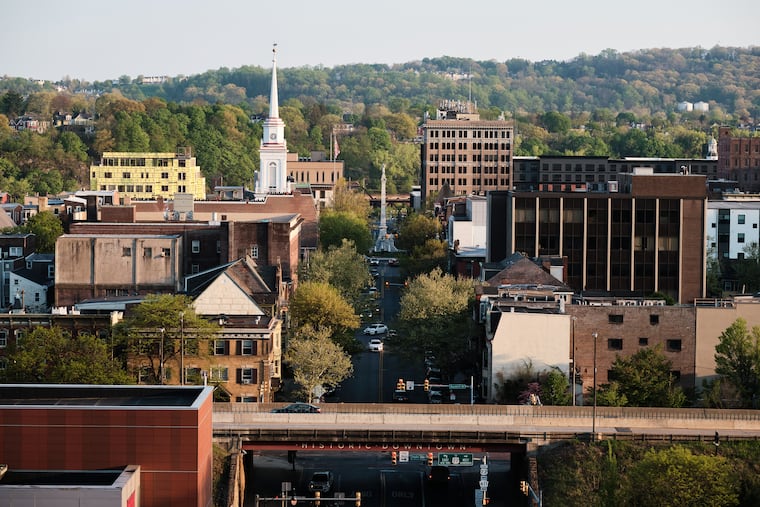
In the early 18th century the site of Allentown was a scrub-oak wilderness where the Lenape fished for trout and hunted deer and grouse. On May 18, 1732, Thomas Penn, a son of William Penn, deeded the land to Joseph Turner, a Philadelphia ironmaker and politician. On September 10, 1735, William Allen, a wealthy shipping merchant who became mayor of Philadelphia the next month, bought 5,000 acres of it from Turner's partner. In the Walking Purchase of 1737, Penn's sons John, Thomas and Richard obtained a large area north of Philadelphia, including present Allentown, in exchange for goods such as shoes, shirts, knives, rum and pipes. A survey of 1753 found a log house Allen had built around 1740 near Jordan Creek, used as a hunting and fishing lodge, where he entertained guests such as Governor John Penn.
More about Allentown
In 1762 Allen laid out and named the town, first called Northampton Towne. A rivalry with the Penns may have spurred him, and in 1763 his attempt to move the county seat from Easton failed. The plan had 42 blocks and 756 lots between today's 4th and 10th streets and Union and Liberty streets, and many streets were named for Allen's children: Margaret, now 5th Street, William, now 6th, James, now 8th, and Ann, now 9th, while Allen Street became 7th.
After the American defeat at Brandywine in September 1777, the Liberty Bell was taken from Philadelphia to Zion German Reformed Church in Northampton Town and hidden under the floor until the British left Philadelphia in June 1778.
Sources
Wikipedia: Allentown, Pennsylvania
Wikipedia: Philadelphia