
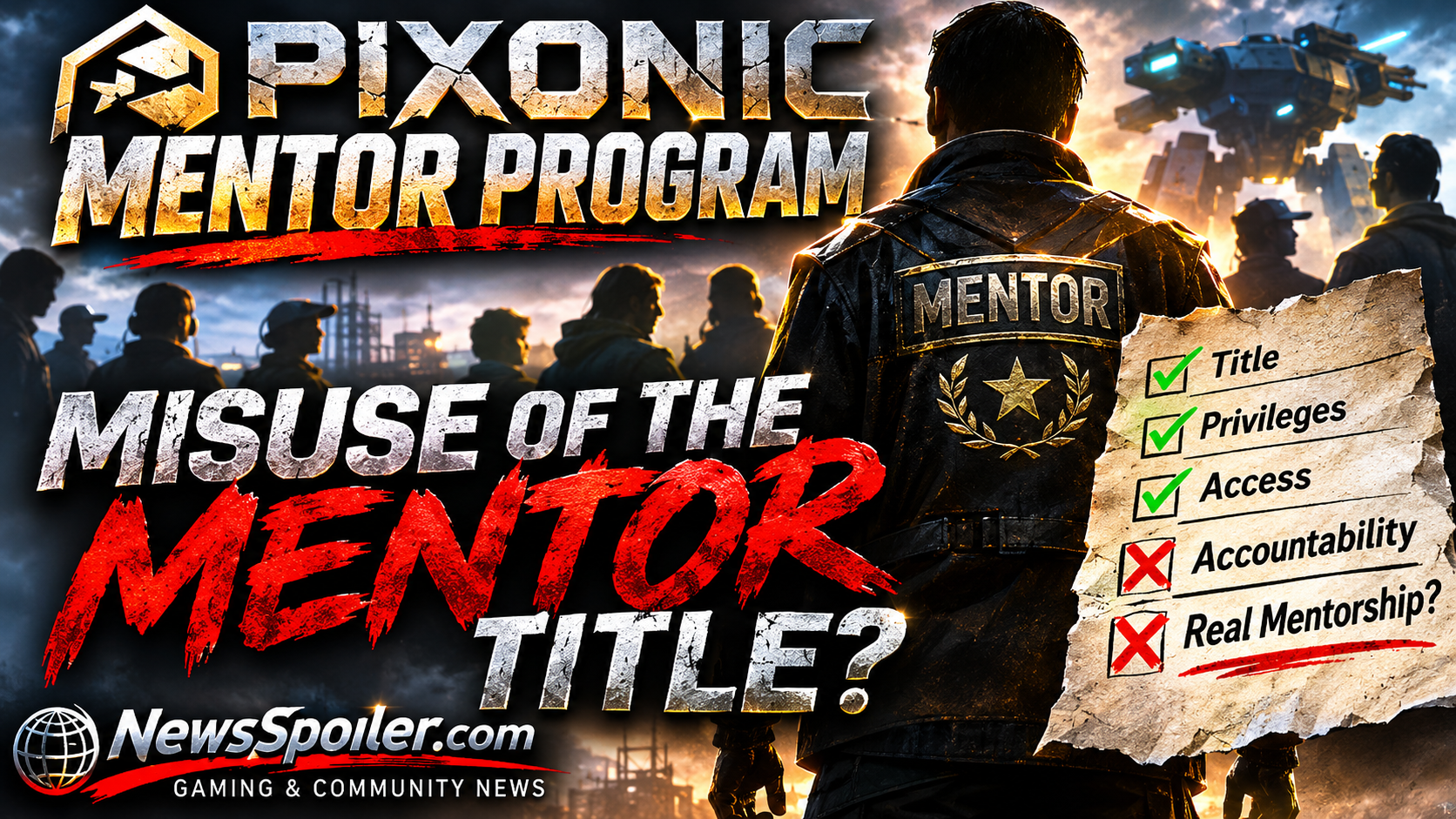
A Mentor Is Supposed to Help People, Not Rule Over Them
The word mentor has a meaning, and it existed long before Pixonic decided to use it within the War Robots community.
A mentor is an experienced, trusted individual who provides guidance, shares knowledge, encourages development, and helps others succeed.
Mentorship is about building people up.
It is not about popularity, favoritism, protecting an inner circle, or using a company's recognition to establish superiority over independent creators.
Yet Pixonic's Mentor program raises a serious question:
Is the company actually promoting mentorship, or is it using a respected title to create the appearance of community leadership?
Because those are two very different things.
What Kind of Lie Is It When a Company Misuses a Title?
When a company uses a word that carries a specific meaning but fails to deliver the qualities associated with that word, several concepts become relevant.
Misrepresentation occurs when something is presented in a way that creates a false or misleading impression.
Deception by omission occurs when important information is withheld, causing an audience to misunderstand the situation.
Institutional hypocrisy occurs when an organization publicly promotes standards that its actual practices contradict.
And false endorsement can become a concern when an organization's recognition creates an inaccurate impression about an individual's qualifications, authority, or conduct.
These descriptions do not automatically prove that Pixonic has deliberately lied. That would require evidence of specific misleading statements or conduct.
But the underlying question is legitimate.
If you call someone a Mentor, shouldn't that person actually demonstrate mentorship?
Otherwise, what exactly is the company representing to its players?
The Difference Between a Content Creator and a Mentor
A content creator produces videos, livestreams, tutorials, reviews, and entertainment.
A mentor does something more.
A mentor shares experience, supports newcomers, helps resolve problems, encourages independent thinking, and contributes to the development of others.
A creator can be extremely successful without being a good mentor.
Likewise, someone with a small audience can be an outstanding mentor.
Subscriber counts do not establish character.
Views do not establish integrity.
Company connections do not establish leadership.
And receiving special privileges from Pixonic does not automatically establish that someone deserves to be regarded as a community guide.
Being selected by a company is not the same thing as earning the trust of a community.
Does Pixonic Understand the Responsibility Behind the Title?
Pixonic's War Robots Creator Program describes Mentors as selected creators who make special contributions to the community.
Its published expectations include helping players and creators, gathering feedback, sharing knowledge, and encouraging positive behavior.
Those are reasonable expectations.
But expectations mean little without accountability.
What happens when a Mentor becomes involved in unnecessary community conflicts?
What happens when independent creators believe they are being excluded or undermined?
What happens when someone with an official title behaves in a way that contradicts the values the title supposedly represents?
Does Pixonic investigate?
Does it apply consistent standards?
Does it revoke recognition when appropriate?
Or does the title become a protective shield?
These are questions Pixonic should be willing to answer publicly.
Mentorship Should Not Be an Exclusive Club
The War Robots community includes thousands of people who contribute without receiving special recognition.
Some operate independent websites.
Others organize giveaways, produce instructional content, help new players, maintain community resources, or dedicate countless hours to livestreaming.
Their contributions do not become less valuable because they lack an official designation.
A genuine Mentor should recognize those efforts.
A genuine Mentor should encourage independent projects rather than view every new initiative as competition.
And a genuine Mentor should understand that helping someone else succeed does not diminish their own accomplishments.
Real mentorship creates more leaders. It does not attempt to preserve a monopoly on leadership.
If a mentorship program becomes primarily about protecting access, influence, and preferred relationships, it has drifted away from its stated purpose.
When the Title Becomes More Important Than the Behavior
Consider the message a company sends when it publicly identifies someone as a Mentor.
New players may assume that individual is trustworthy.
Smaller creators may assume that individual will offer guidance.
Community members may assume that person represents the company's expectations for responsible conduct.
Those assumptions are not unreasonable.
The company created them by choosing the title.
That is why the designation carries responsibility beyond simply producing content.
If Pixonic wants the public to associate its Mentors with respect, integrity, and helpfulness, it should ensure those qualities are reflected in their conduct.
Otherwise, the company risks turning mentorship into a branding exercise.
And branding something as mentorship does not make it mentorship.
The Community Should Be Allowed to Question Its Mentors
No individual should become immune to criticism simply because a company has given them an official designation.
Mentors are not above other creators.
They are not entitled to unquestioned loyalty.
They should not be able to use their status to discourage legitimate criticism, dismiss independent contributors, or imply that disagreement with them is disagreement with Pixonic.
Likewise, accusations against Mentors should be evaluated using evidence rather than rumor.
Accountability must work in both directions.
A community cannot claim to value fairness while automatically believing allegations against independent creators and dismissing complaints involving recognized individuals.
The same standards should apply to everyone, regardless of subscriber count, popularity, or company affiliation.
Pixonic Has a Choice: Protect the Meaning or Cheapen the Word
Pixonic controls its Creator Program.
It chooses whom to recognize.
It establishes the benefits.
It defines the expectations.
And it has the authority to determine whether participants continue meeting those expectations.
That means the responsibility for maintaining the integrity of the Mentor designation ultimately belongs to Pixonic.
If the company wants Mentors to represent community leadership, it should establish transparent standards for evaluating that leadership.
If it wants Mentors to encourage positive behavior, it should demonstrate how those expectations are enforced.
If it wants independent creators to respect the program, it should show that recognition is based on meaningful contributions rather than favoritism.
The company cannot reasonably expect the community to respect a title solely because the company issued it.
The Real Damage Is to the Meaning of Mentorship
The greatest concern is not that Pixonic gives selected creators special benefits.
Companies establish recognition programs all the time.
The concern is what happens when a respected word becomes disconnected from the responsibilities it communicates.
A Mentor should be someone people can learn from.
Someone willing to share knowledge.
Someone who encourages others to improve.
Someone who understands that leadership is demonstrated through actions rather than announced through titles.
When those principles are absent, the designation loses credibility.
And when a company continues promoting a designation without addressing legitimate concerns about whether its standards are being met, it risks misleading the very community it claims to support.
A Question Pixonic Needs to Answer
Are your Mentors selected because they demonstrate the qualities of genuine mentorship, or because they provide promotional value to your company?
There is nothing inherently wrong with rewarding successful content creators.
But if the primary purpose is promotion, call it a promotional partnership.
If the purpose is recognition, call it a creator recognition program.
If the purpose is to provide privileged access, call it a partnership program.
But if you choose the word Mentor, the community has every right to expect mentorship.
Words carry meaning.
Titles create expectations.
And company recognition should never replace accountability.
Final Word: You Cannot Manufacture Integrity With a Title
Pixonic can appoint a thousand Mentors tomorrow.
It can give them special accounts, exclusive access, promotional opportunities, and official recognition.
None of those benefits automatically makes someone a mentor.
A mentor is defined by the people they help, the knowledge they share, and the example they set.
If Pixonic's program consistently delivers those qualities, the company should be able to demonstrate it.
If it does not, the company should reconsider how it uses the title.
Because the difference between mentorship and marketing is not complicated.
Mentorship builds people up. Marketing builds an image.
And when a company markets the image of mentorship without consistently delivering the substance, the public has every reason to question whether that image is misleading.
Pixonic, the question is simple: Are you creating Mentors, or are you just handing out titles?
The War Robots community deserves more than a label. It deserves leadership that lives up to the meaning of the word.