
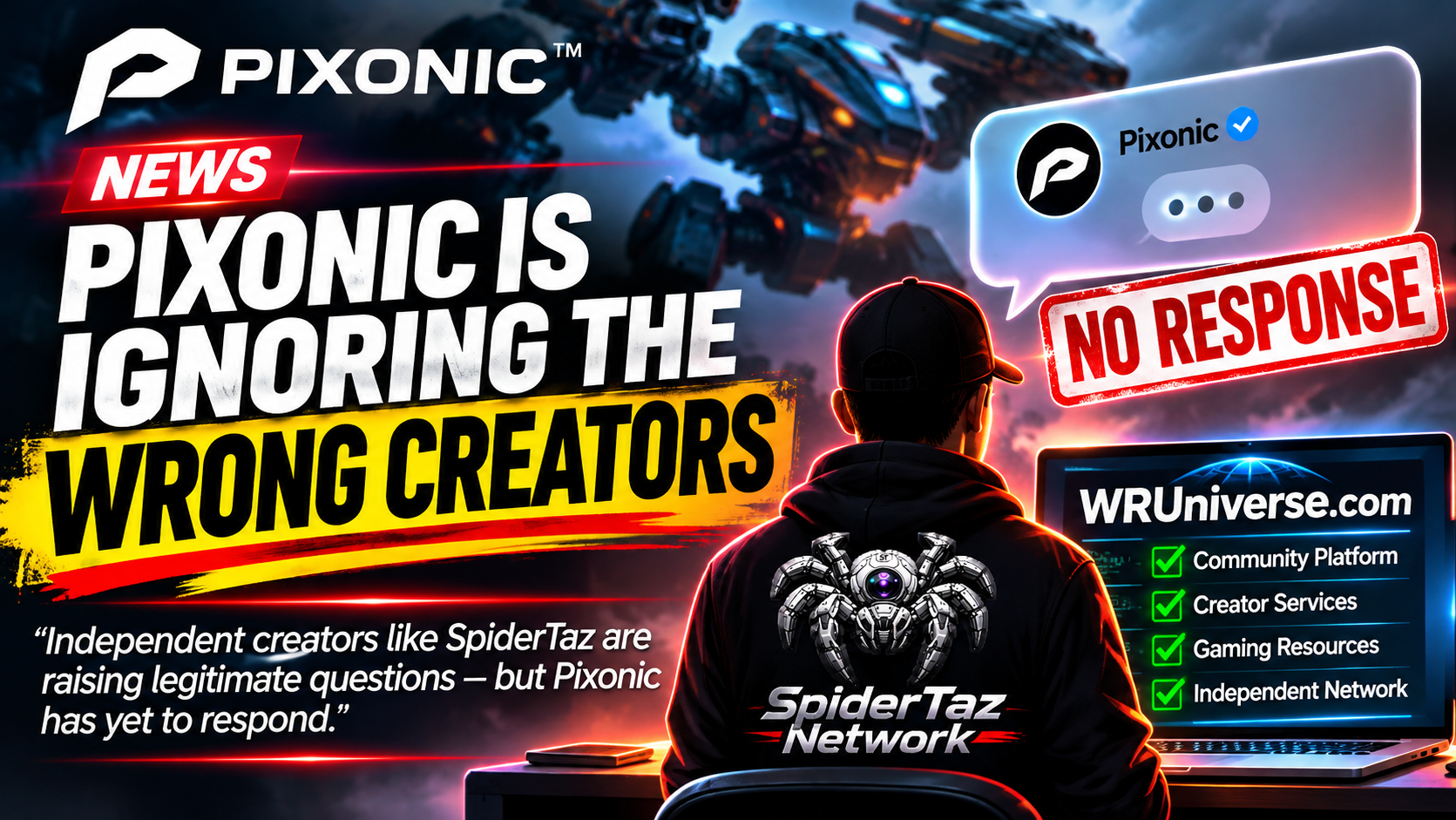
Pixonic, You Might Want to Pay Attention
There is a difference between ignoring a complaint and ignoring someone who has the platforms, experience, and determination to make sure that complaint does not disappear.
Pixonic, the company behind War Robots, may be learning that difference.
Independent creators are not simply people who upload gameplay videos. They build communities, answer player questions, organize events, promote games, create resources, and keep audiences engaged long after a company's latest marketing campaign has ended.
Some creators go even further. They invest their own time, money, technology, and infrastructure into building independent platforms that benefit the gaming community.
And when those creators raise legitimate questions, silence is not an acceptable substitute for communication.
A Creator Who Built More Than a YouTube Channel
SpiderTaz is not simply another War Robots player asking for attention.
He is the founder of the SpiderTaz Network, an expanding collection of independent websites, creator services, gaming communities, and digital platforms.
His work includes WRUniverse.com, an independent platform dedicated to the War Robots community, alongside creator discovery systems, gaming resources, and other services designed to give creators more opportunities to grow.
The distinction matters.
A creator with a YouTube channel can reach an audience.
A creator building an interconnected network of independent platforms can establish additional ways to reach audiences, publish information, organize communities, and preserve discussions that might otherwise disappear into social media feeds.
That is the kind of independent creator a gaming company should be communicating with, not leaving unanswered.
The Questions Pixonic Has Yet to Answer
According to SpiderTaz, attempts to communicate with Pixonic about creator-related concerns have gone unanswered.
Among the issues he has raised are questions surrounding Pixonic's D-Gems purchasing system, creator participation, the handling of creator inquiries, and whether independent creators receive meaningful access to company representatives.
SpiderTaz has also questioned whether the company's purchasing infrastructure provides adequate opportunities for players to support their preferred creators.
These are not unreasonable subjects for discussion.
They concern transparency, communication, community relationships, and the treatment of creators who invest resources in promoting the game.
Pixonic may have explanations for its decisions. But explanations require communication.
When creators ask questions and receive silence, the unanswered questions become part of the story.
Independent Does Not Mean Insignificant
One of the biggest mistakes a gaming company can make is measuring a creator's value exclusively by subscriber counts, official program status, or the number of views on an individual video.
Some creators build influence through infrastructure.
They operate websites. They develop applications. They organize communities. They create tools and services that other creators use.
Their reach cannot always be measured by a single social media dashboard.
More importantly, independent creators do not necessarily need a company's permission to discuss its products, investigate its decisions, or publish criticism.
They can build their own distribution channels.
They can document their experiences.
And they can continue asking questions long after a support ticket goes unanswered.
Ignoring the Wrong Creators Can Become a Business Problem
There is a fundamental difference between criticism intended to destroy something and criticism intended to make it better.
Creators who invest in a gaming community have a legitimate interest in seeing that community succeed.
They want players to remain engaged. They want new players to discover the game. They want creators to have opportunities to grow.
But they also want accountability.
A company that dismisses constructive criticism risks turning potential collaborators into persistent independent critics.
That does not require personal attacks, manufactured controversy, or organized harassment.
It requires only documented experiences, legitimate questions, and the willingness to keep publishing.
And when independent publishing infrastructure already exists, a company's silence does not prevent the discussion from continuing.
It simply means the company is not participating in that discussion.
This Is Bigger Than One Creator
The issue is not whether Pixonic gives SpiderTaz special treatment.
It should not.
The issue is whether independent creators receive consistent, professional communication regardless of their status within an official creator program.
If a creator reports a problem, who is responsible for answering?
If a creator questions a monetization system, is there a meaningful process for reviewing that concern?
If a creator operates independent community resources, does Pixonic recognize that contribution?
And if a company disagrees with criticism, why not explain its position?
These are questions worth asking because the answers matter to more than one individual.
They matter to the entire creator ecosystem.
Pixonic Has an Opportunity to Respond
Pixonic can address these concerns without surrendering control of its policies or agreeing with every criticism.
It can explain how creator inquiries are handled.
It can clarify how its D-Gems purchasing system supports creators.
It can provide transparency around creator participation and eligibility.
And it can establish a reliable channel for addressing legitimate concerns raised by independent community builders.
None of that requires extraordinary concessions.
It requires communication.
The Message to Pixonic Is Simple
SpiderTaz has built independent platforms rather than waiting for someone else to provide the tools.
He has invested in creator services rather than relying entirely on existing social media systems.
He has worked to expand opportunities for gaming communities rather than limiting his efforts to personal channel growth.
And he has demonstrated that a creator does not need corporate approval to build something useful.
Pixonic may choose not to respond. But it cannot assume that silence will end the conversation.
The SpiderTaz Network provides an independent avenue for publishing questions, documenting experiences, and examining issues affecting creators and players.
That work can continue whether Pixonic participates or not.
A Question for Every War Robots Creator
Have you contacted Pixonic and received no response?
Have you encountered difficulties with creator programs, monetization, or communication?
Have you raised legitimate concerns only to find that nobody appears willing to address them?
Your experience deserves to be heard.
Players and creators should document their concerns, preserve relevant correspondence, and ask for clear answers through appropriate channels.
Independent creators should not have to remain silent simply because they lack an official title or corporate endorsement.
The War Robots community belongs to the players and creators who participate in it, not exclusively to the company that develops the game.
Pixonic has every opportunity to participate in this conversation.
The question is whether it will.
NewsSpoiler.com welcomes a response from Pixonic addressing the concerns raised in this article. Any substantive company response can be incorporated into follow-up coverage.