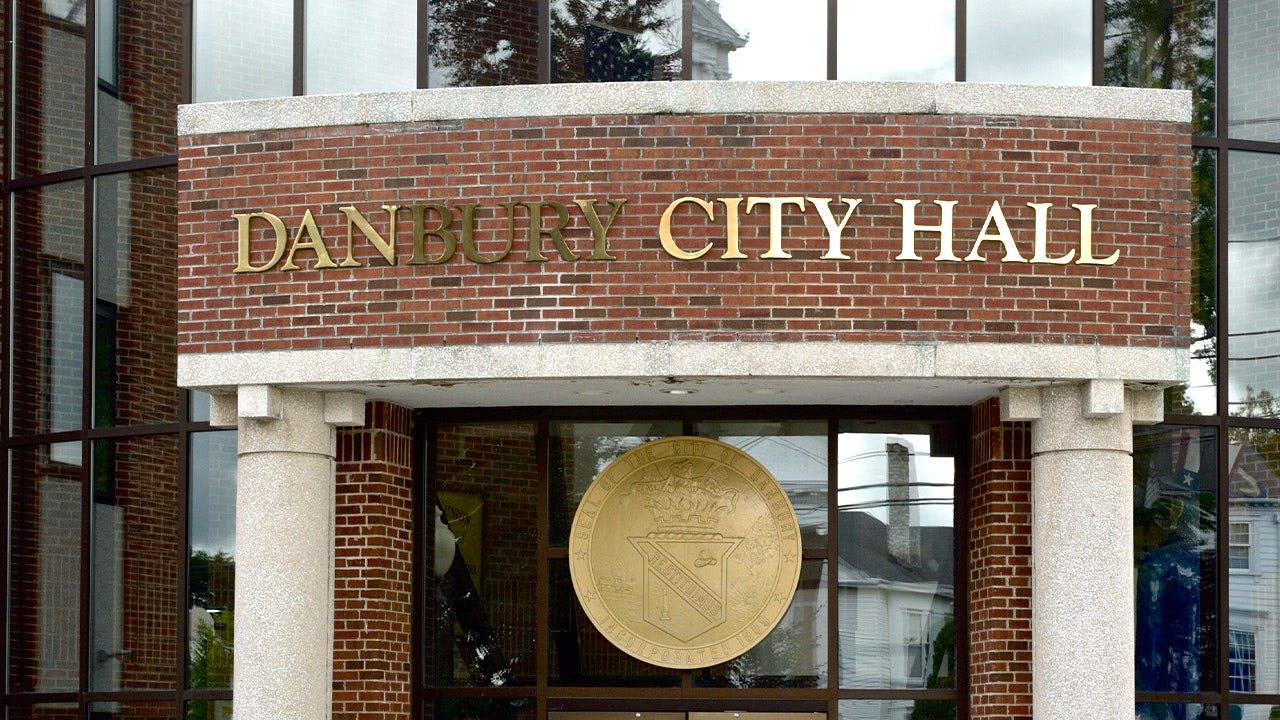
Colonists settled Danbury in 1685, when eight families moved from what are now Norwalk and Stamford. The area was called Pahquioque after the Algonquian-speaking Pahquioque, believed to be a band of the Paugussett, who lived along the Still River. Among the first settlers were Samuel Benedict, his brother James, James Beebe and Judah Gregory, who bought land from the Pahquioque in 1685. The settlers named the town Swampfield for its wetlands, but in October 1687 the General Court decreed the name Danbury, given by Governor Robert Treat after Danbury in Essex, England. The town was surveyed in 1693 and received its patent in 1702.
More about Danbury
During the Revolution Danbury was an important supply depot for the Continental Army. Sixteen-year-old Sybil Ludington is said to have ridden 40 miles at night to warn of the approaching British, though modern scholars question the family accounts of the ride. In late April 1777 British forces under Major General William Tryon burned and sacked the town, an event recalled by the city's motto, Restituimus, "We have restored," and General David Wooster, mortally wounded in the Battle of Ridgefield that followed, is buried in Danbury's Wooster Cemetery.
In 1802 President Thomas Jefferson wrote a letter to the Danbury Baptist Association, which feared persecution by the town's Congregationalists, using the phrase "separation of church and state," described as its first known use in American legal or political writing. The first Danbury Fair was held in 1821, became a yearly event in 1869 and ended in 1981, and its grounds became the Danbury Fair Mall, opened in 1986.
Sources
Wikipedia: Danbury, Connecticut